
Skip to content
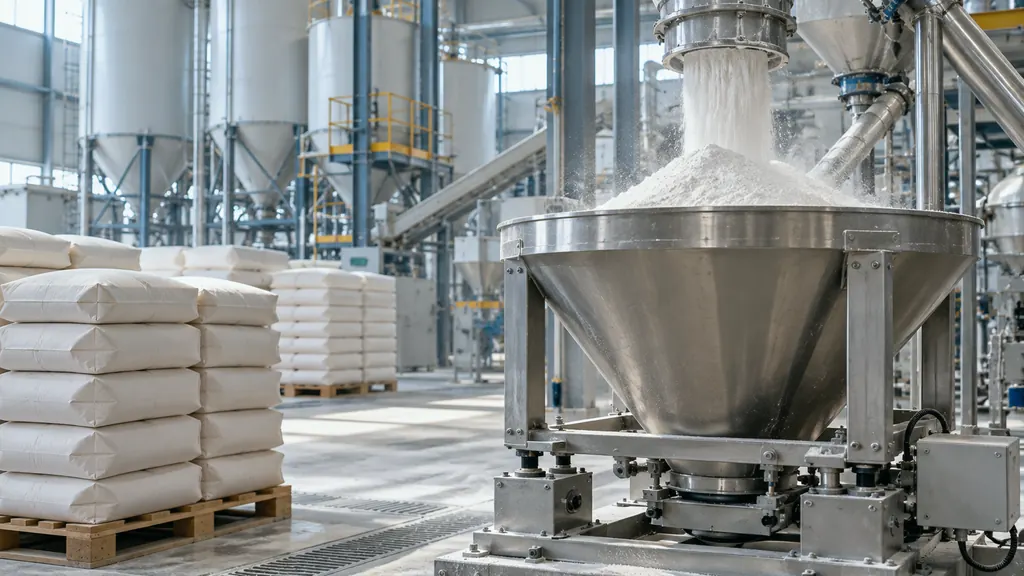
Powder raw materials being fed into an industrial mixer at a dry-mix mortar plant

Construction Chemical Powder Raw Materials

The complete dry-mix powder range — binders, rheology additives, set controllers, fibres, fillers and air management — for tile adhesive, render, screed, grout and repair mortar producers across the GCC.

The dry-mix powder system

Specifications are shown as supplied. Linked products have their own page with the full technical data; the rest are supplied to order — ask us for current availability and documentation.

Binders & Polymer Powders

RDP — Redispersible Polymer Powder

Vinyl Acetate/Ethylene copolymer · VAE-based

Solid content≥98%
Ash content10–14% (anti-caking)
Min film temp0–5°C
GradesStandard, flexible, water-repellent

Core binder for tile adhesives, self-levelling compounds, repair mortars, EIFS/ETICS systems, and exterior insulation. Improves adhesion, flexibility, and workability. Available in standard and flexible grades.

View product specification

PVA — Polyvinyl Alcohol

CAS 9002-89-5 · Various hydrolysis grades

Hydrolysis88% / 96% / 99% grades
Viscosity4–65 mPa·s (4% solution)
ApplicationMortars, paper, adhesives

Water-soluble polymer used as a co-binder and adhesion promoter in dry-mix mortars, as a protective colloid in emulsion polymerisation, and as a film former in paper coating. Multiple viscosity and hydrolysis grades available.

Enquire for availability

Gypsum — Anhydrite & Hemihydrate

CAS 10101-41-4 (gypsum) · Binder/filler

Gradesα-hemihydrate, β-hemihydrate, anhydrite
ApplicationPlaster, screed, self-levelling
Setting timeControlled by retarder addition

Calcium sulphate-based binder for gypsum plasters, floor screeds, and self-levelling underlayments. Fast setting — requires set retarder (sodium gluconate, tartaric acid) for workability in GCC temperatures.

Enquire for availability

Calcium Aluminate Cement (CAC)

Aluminate-based hydraulic binder

Al₂O₃ content40–80% (various grades)
PropertiesFast strength, refractory, sulphate-resistant
ApplicationRepair mortars, refractory, sewage

Rapid strength gain cement with excellent chemical and temperature resistance. Used in rapid-setting repair mortars, refractory castables, floor screeds, and sulphate-resistant applications for GCC industrial construction.

Enquire for availability

Quicklime & Hydrated Lime

CaO / Ca(OH)₂ · CAS 1305-78-8 / 1305-62-0

CaO content≥90% (quicklime)
ApplicationMasonry mortars, plasters, soil stabilisation
GradesBuilding lime, dolomitic lime

Traditional hydraulic binders for masonry mortars, lime plasters, and soil stabilisation. Hydrated lime also used as a plasticiser in cement mortars and as a filler in dry-mix systems for improved workability.

Enquire for availability

Waterglass — Powdery Alkali Silicates

Sodium/Potassium silicate · Powder grades

SiO₂:Na₂O ratio2.0–3.4 (various grades)
ApplicationFire-resistant mortars, concrete hardeners

Powder sodium silicate for fire-resistant dry-mix systems, surface hardeners, and geopolymer binders. Also used as an activator in alkali-activated cement systems for low-carbon concrete applications.

Enquire for availability

Rheological Additives

HPMC — Hydroxypropyl Methylcellulose

CAS 9004-65-3 · Cellulose ether

Viscosity grades5,000 to 200,000 mPa·s
Key functionWater retention, thickening, sag resistance
ApplicationTile adhesives, plasters, renders, EIFS
Thermal gelYes — gels on heating (GCC benefit)

The primary cellulose ether in dry-mix construction — controls water retention and rheology across all mortar types. High-viscosity grades for tile adhesives and renders; lower viscosity for self-levelling and repair mortars.

View product specification

HEC — Hydroxyethyl Cellulose

CAS 9004-62-0 · Cellulose ether

Viscosity grades100 to 100,000 mPa·s
SolubilityCold water soluble, no thermal gel
ApplicationCement-free gypsum plasters, paint thickener

Used in gypsum-based plasters where HPMC's thermal gelation behaviour is undesirable. Also used as a thickener in latex paints, adhesives, and personal care products. No substitution cost vs HPMC for gypsum systems.

View product specification

Starch Ether

Modified starch · Hydroxypropyl starch

FunctionSag resistance, water retention
SynergyWorks with HPMC (10–20% replacement)
ApplicationTile adhesives, renders, EIFS
CostLower cost vs HPMC — partial replacement

Used as a partial replacement for HPMC (typically 10–20%) to reduce cost while maintaining sag resistance in tile adhesives. Improves workability and adhesion. Cannot fully replace HPMC — used in combination.

View product specification

Guar Ether — Hydroxypropyl Guar

Modified guar gum · Galactomannan derivative

FunctionThickening, water retention
SolubilityCold water, rapid hydration
ApplicationOil well cementing, construction grouts

Fast-hydrating thickener for oil well cementing slurries and construction grouting. Provides viscosity control and fluid loss reduction. Also used in industrial cleaning formulations.

Enquire for availability

Polyacrylamide (PAM)

CAS 9003-05-8 · Anionic / Cationic / Non-ionic

GradesAnionic, cationic, non-ionic
ApplicationConcrete, soil stabilisation, water treatment

Used in concrete as a viscosity modifying agent (VMA) for self-compacting concrete (SCC) and underwater concrete. Also used in soil erosion control and water treatment applications.

Enquire for availability

Thixotropic Agents (Inorganic)

Attapulgite / Sepiolite / Bentonite

FunctionSag resistance, anti-settling
ApplicationCementitious renders, grouts, primers

Inorganic thixotropes for sag resistance in vertical applications and anti-settling in formulated products. Used in combination with cellulose ethers in high-build render systems.

Enquire for availability

Reinforcement Fibres

Cellulose Fibre

Natural cellulose · Flocculated / granulated

Fibre length0.2–2.0 mm (various grades)
Bulk density50–100 g/l
FunctionCrack resistance, void formation, water retention
ApplicationRenders, EIFS, tile adhesives, fibre cement

Cellulose fibres improve crack resistance, workability, and water retention in dry-mix mortars. Also used to create controlled void structures in lightweight renders, and as a processing aid in fibre cement board and fibre cement roofing.

View product specification

Polypropylene (PP) Fibres

Synthetic fibre · 6–18 mm monofilament

Fibre length6, 12, 18 mm
FunctionPlastic shrinkage crack control
Dosage0.5–1.0 kg/m³ concrete
ApplicationConcrete, screed, shotcrete

Micro PP fibres prevent plastic shrinkage cracking in fresh concrete — critical in hot, dry GCC conditions where rapid moisture loss causes early cracking. Used in concrete slabs, screeds, and precast elements.

Enquire for availability

Plasticisers & Superplasticisers

PCE — Polycarboxylate Ether Superplasticiser

Polycarboxylate polymer · Liquid & powder grades

Water reduction20–40% (vs reference concrete)
Dosage0.1–0.4% by weight of cement
GradesStandard, slump-retaining, early-strength
CompatibilityAll Portland cements, CAC

Third-generation superplasticiser for high-performance concrete, self-compacting concrete (SCC), and self-levelling floor compounds. Powder grades available for dry-mix incorporation. Slump-retaining grades essential for GCC hot weather concreting.

View product specification

Lignosulphonate Plasticiser

Sodium / calcium lignosulphonate

Water reduction5–10%
FunctionPlasticiser + mild set retarder
ApplicationReady-mix concrete, masonry mortars

Cost-effective first-generation plasticiser derived from wood pulp processing. Suitable for general-purpose concrete and masonry mortars. Slight retarding effect helps in hot GCC conditions.

View product specification

Shrinkage-Reducing Additive (SRA)

Alkyl ether-based · Liquid powder admixture

Shrinkage reduction40–60%
ApplicationFloor screeds, bridge decks, repair mortars
Dosage1–2% by weight of cement

Reduces drying shrinkage and associated cracking in concrete and mortars — particularly important for large-area floor slabs in GCC climate where rapid drying creates high shrinkage stress.

Enquire for availability

Set Retarders & Accelerators

Sodium Gluconate — Set Retarder

CAS 527-07-1 · C₆H₁₁NaO₇

Purity≥98%
FunctionCement set retarder, plasticiser
Dosage0.05–0.3% by weight of cement
AdvantageEffective at high GCC temperatures

Most widely used set retarder in GCC ready-mix concrete and dry-mix mortars. Also functions as a mild plasticiser. Effective in gypsum systems (used as tartaric acid alternative). High purity food/technical grades available.

View product specification

Calcium Formate — Set Accelerator

CAS 544-17-2 · Ca(HCOO)₂

Purity≥98%
FunctionEarly strength accelerator
Dosage0.5–2.0% by weight of cement
ApplicationTile adhesives, repair mortars, renders

Chloride-free accelerator that speeds up early strength development — essential for tile adhesives and repair mortars that need fast walkable strength. Preferred over calcium chloride in reinforced concrete due to zero chloride content.

View product specification

Lithium Carbonate — Gypsum Accelerator

CAS 554-13-2 · Li₂CO₃

FunctionGypsum plaster accelerator
Dosage0.01–0.05% by weight of gypsum
ApplicationGypsum plasters, self-levelling compounds

Highly effective accelerator for gypsum-based plasters — accelerates setting time from several hours to minutes at very low dosage. Used when fast-setting gypsum plaster is needed for rapid construction programmes.

Enquire for availability

Air Entraining, Foaming & Gas-Forming Agents

Air Entraining Agent

Surfactant-based · Anionic

FunctionControlled air void entrainment
Air content3–6% in concrete
ApplicationConcrete, lightweight renders, masonry

Entrains stable, uniformly distributed microscopic air bubbles in concrete and mortar. Improves freeze-thaw resistance, workability, and in lightweight renders, reduces density. Essential for EIFS base coats and thin-bed renders.

View product specification

Foaming Agent — Protein & Synthetic

Protein hydrolysate / Surfactant blend

Foam typeProtein or synthetic
ApplicationFoamed concrete, cellular concrete
Density range300–1,600 kg/m³

Used to produce lightweight foamed/cellular concrete for floor screeds, roof insulation, void filling, and non-structural lightweight partition blocks. Protein-based foams produce more stable bubbles and denser, stronger foamed concrete.

Enquire for availability

Gas-Forming Agent — Aluminium Powder

CAS 7429-90-5 · Micro-fine aluminium

FunctionHydrogen gas generation in alkaline media
ApplicationAAC blocks, expansive grouting
Dosage0.04–0.08% by weight of binder

Fine aluminium powder reacts with Ca(OH)₂ in cement to generate hydrogen gas, creating cellular structure in autoclaved aerated concrete (AAC) blocks. Also used in expansive grout formulations for pre-stressed anchor bolt grouting.

Enquire for availability

Fillers, Pozzolana & Aggregates

Microsilica — Silica Fume

CAS 69012-64-2 · Amorphous SiO₂ ≥85%

Particle size0.1–0.3 μm
FunctionPozzolan, void filler, strength enhancer
ApplicationHigh-strength concrete, marine concrete

Ultra-fine pozzolanic material that fills micro-voids between cement particles — dramatically improves compressive strength, permeability resistance, and durability. Essential for aggressive GCC marine and industrial environments. Used in ADNOC, Aramco, and major infrastructure specifications.

Enquire for availability

Fly Ash

ASTM Class C & F · Coal combustion product

SiO₂ + Al₂O₃ + Fe₂O₃≥70% (Class F)
FunctionPozzolan, cement replacement, workability
Replacement level15–35% of cement

Cost-effective cement replacement that improves workability, reduces heat of hydration, and enhances long-term strength and durability. Reduces CO₂ footprint — increasingly specified in Saudi Arabia Vision 2030 green building projects.

Enquire for availability

Microspheres & Microballoons

Glass / Ceramic hollow spheres

Particle size10–200 μm
Density0.15–0.60 g/cm³ (true density)
ApplicationLightweight renders, insulating mortars, buoyancy

Hollow glass or ceramic spheres used to produce lightweight, thermally insulating mortars and renders. Used in EIFS base coats, lightweight floor screeds, and offshore buoyancy syntactic foams for subsea applications in the Gulf.

Enquire for availability

Other Construction Additives

Powder Defoamer — Construction Grade

Hydrophobic silica / mineral oil compound

FormFree-flowing powder
FunctionAir void elimination in mortars
ApplicationSelf-levelling, tile adhesives, renders

Powder defoamer for dry-mix incorporation — eliminates undesirable air entrainment in self-levelling compounds and tile adhesives where a smooth, void-free surface is required. Compatible with all HPMC grades and RDP.

View product specification

Hydrophobising Agent

Stearate-based / silicone-based powders

FunctionWater repellency, reduced absorption
ApplicationRenders, masonry mortars, plasters
GradesOleate, stearate, silicone emulsion

Imparts water repellency to cementitious mortars and renders — essential for exterior facades in GCC coastal environments. Reduces capillary absorption while maintaining vapour permeability. Available as fatty acid salts (stearates) or silicone-based grades.

Enquire for availability

Expansive Additive

Aluminium-based / calcium sulphoaluminate

FunctionCompensates shrinkage, expansion grouting
ApplicationPre-stressed grouting, shrinkage compensation

Used in precision grouting applications where shrinkage of the grout must be compensated — pre-stressed anchor bolt grouting, equipment base plate grouting, and non-shrink repair mortars for structural applications.

Enquire for availability

Iron Oxide Pigments

Red: CAS 1309-37-1 · Yellow: CAS 51274-00-1

ColoursRed, yellow, black, brown
Alkali resistanceExcellent — stable in cement
ApplicationColoured concrete, paving, renders

Synthetic iron oxide pigments are the standard colourant for cementitious systems — fully alkali-stable and lightfast. Used in coloured concrete paving, decorative renders, and coloured mortar joints. Available in red, yellow, black, and brown grades.

View product specification

Stabilisers — Viscosity Stabiliser

Welan gum / Diutan gum / modified biopolymers

FunctionSegregation resistance in SCC
ApplicationSelf-compacting concrete, grouts

Viscosity-modifying agents (VMAs) that prevent segregation and bleeding in self-compacting concrete and highly fluid grouts. Biopolymer-based grades (welan gum) provide stability without excessive viscosity increase.

Enquire for availability

Defoamer — Liquid Construction Grade

Mineral oil / polysiloxane blend

FormLiquid emulsion
ApplicationReady-mix concrete, liquid admixtures

Liquid defoamer for ready-mix concrete production and liquid admixture manufacturing. Controls air entrainment from surfactant-containing admixtures. Compatible with all standard cement admixture formulations.

View product specification

Looking for a chemical supply partner?

Tell us the product, grade, quantity and delivery location. Our team in Dubai and Riyadh will come back to you with availability and pricing.